
MY FAVORITE MOVIE
MAUREEN GALLIANI
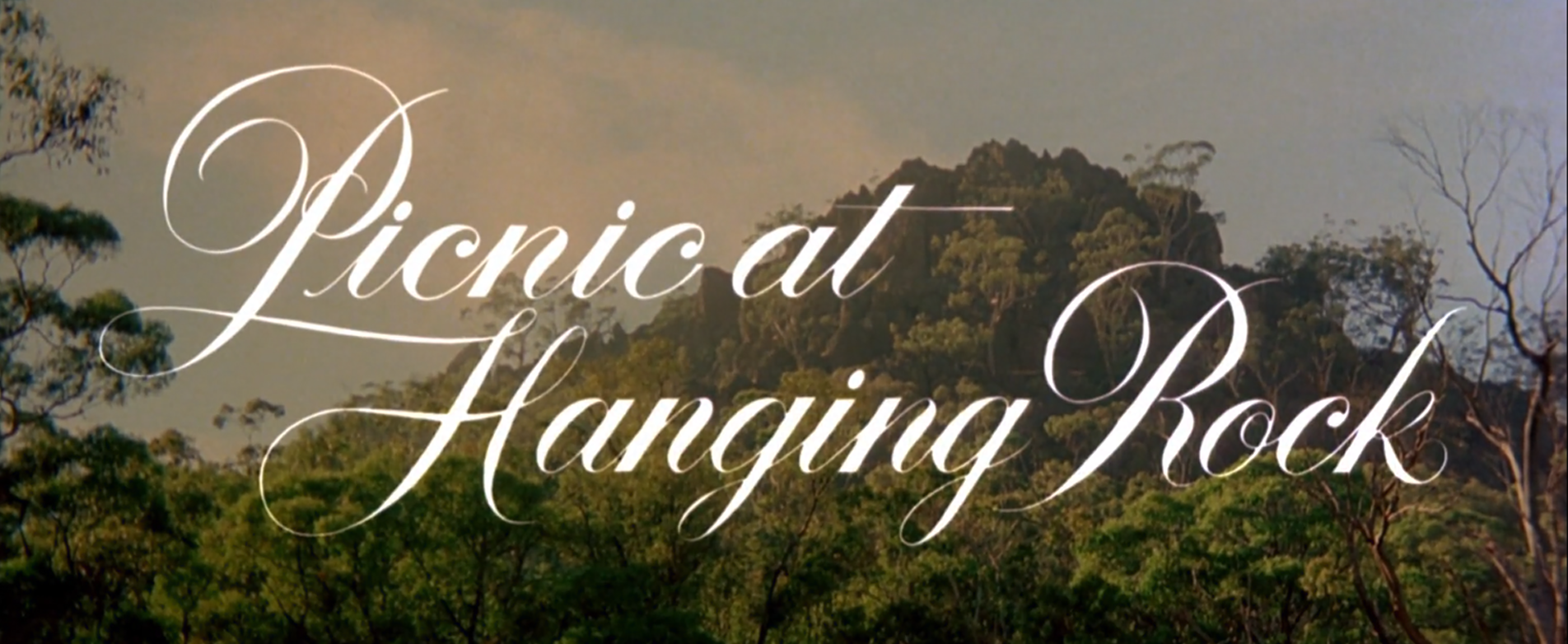
If you ask me if I have a favorite film, I will answer you without hesitation: Picnic at Hanging Rock. I first saw this beautiful film when it was released at the Lumiere Theater in San Francisco, and I have never loved a film more. Picnic at Hanging Rock is a seminal Australian New Wave film; beginning in the early 70’s through the late 80’s, there was a big resurgence in the popularity of Australian films in the US, and many of the films celebrated the freshness, vitality, and quirkiness of the wondrous land down under.
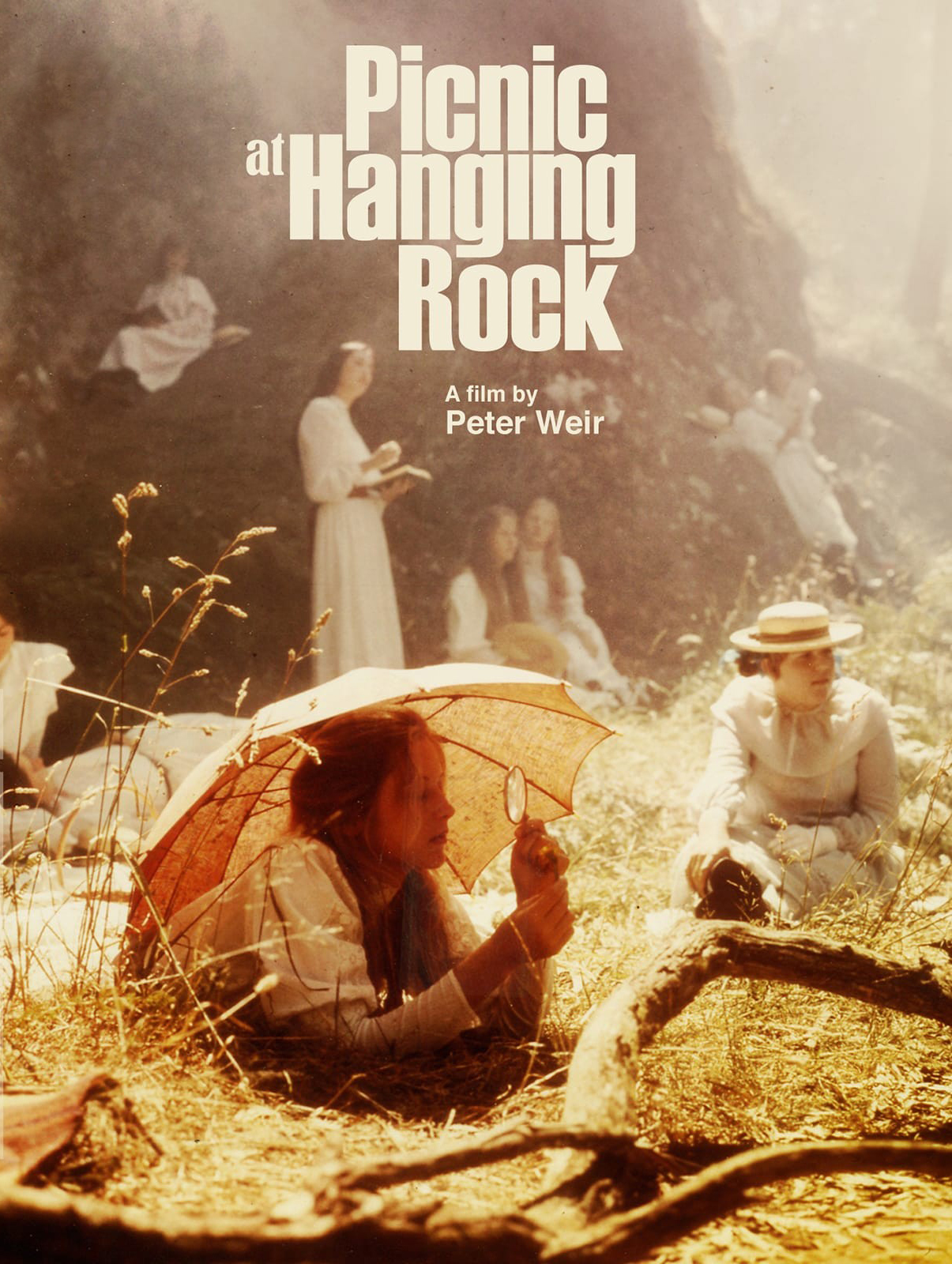
The film opens with our main character, Miranda, uttering the words “What we see and what we seem are but a dream, a dream within a dream,” followed by Gheorghe Zamir’s’ Romanian pan flute playing an achingly beautiful intro. Directed by Peter Weir (coincidentally, my favorite director), Picnic is a hauntingly beautiful film, eerie and unsettling, with a strong sense of time and place, so much so that I felt transported. Set in 1900, the film tells the enigmatic tale of a group of girls at a turn-of-the-century boarding school who make a Valentine’s Day excursion into the bush to Ayers “Hanging” Rock; three of the girls, as well as a teacher, inexplicably vanish. Picnic at Hanging Rock has a gorgeous, provocative, hazy quality that gives it such a unique look and feel. I read that to accentuate this dreamy look, cinematographer Russell Boyd used bridal veils of various textures to create a dreamlike quality throughout.
Ayers Rock itself plays a huge role in the atmosphere and mood of the film. The Rock stands at 1,141 feet tall, 2.2 miles long and 1.2 miles wide, and most of it is underground. More than 1.5 miles of the rock is believed to lie beneath, although no one knows how far down it goes. The Aboriginal people believe that the Rock is a mystical place. Much of the filming actually took place on the rock, and cast and crew have spoken of strange things happening during the filming. In any event, there’s an almost mythical quality surrounding the film.
I won’t give any more of the plot away if you haven’t seen the film, but the visuals are so stunning. The vision of these boarding school girls, their adolescent femininity and pristine white dresses, all stitched and laced up, paint such a contrast to the incredibly wild environment that is everywhere around them in the hot, foreboding bush terrain.
The film is based on a book by Lady Joan Lindsay, and she claimed that her inspiration came through a series of dreams that she had over the course of a week. There are those that think the story is based on fact, and Joan Lindsay did nothing to dispel those notions, but by all accounts, it is fictional. There was a final chapter in the book that was not included in the film, and the excised chapter of the novel was published posthumously as a standalone book in 1987, three years after her death, titled The Secret of Hanging Rock. If the final chapter had been included, it would have made for a very different film indeed, since it changed the whole tone of the story.
There’s much that has been written about the film, by scholars and professionals, and I won’t attempt do that here. What I will say is that for me, Peter Weir has created such a sense of time and place, I get lost in it, and I still get goosebumps every time I watch it. This is why we love film, isn’t it? I know I’m not alone in my love for Picnic; for years, there were special screenings of Picnic at Hanging Rock on Valentine’s Day at the Rock, and the film has its own cult following.
Always a popular tourist destination, the Rock became so popular after the film was released that the climb to the top is no longer allowed. It’s now named Uluru/Ayers Rock to reflect its original Aboriginal name and sacred origins. The significance of the Rock to the native people cannot be overstated. There are rock caves and ancient paintings, and it’s listed as a UNESCO World Heritage site. The filming that Peter Weir did on the Rock could never happen today.
If you’ve never seen the film, I recommend it! It’s available on Amazon Prime HERE. If you decide to watch it, please let me know what you think, I’d love to hear from you.
If you’d like to check out some other Australian/New Zealand New Wave films, here’s just a sampling: The Last Wave, The Year of Living Dangerously, Gallipoli, The Cars That Ate Paris (Peter Weir); My Brilliant Career, Starstruck (Gillian Armstrong); Breaker Morant, Puberty Blues (Bruce Beresford); The Devil’s Playground, A Cry in the Dark (Fred Schepisi); Mad Max, Mad Max 2: The Road Warrior (George Miller); Chariots of Fire (Hugh Hudson); Wake in Fright (Ted Kotcheff); The Year My Voice Broke (John Duigan); Dead Calm, Heatwave (Philip Noyce); Muriel’s Wedding (P.J. Hogan); Strictly Ballroom (Baz Luhrmann)
DOWN UNDER PLAYLIST
The Down Under Playlist (HERE ON SPOTIFY) is a compilation of songs/scores from Australian/New Zealand films including: Picnic at Hanging Rock, The Year of Living Dangerously, Gallipoli, Walkabout, Priscilla, Queen of the Desert, Muriel’s Wedding, The Sapphires, The Proposition, Animal Kingdom, Rabbit Proof Fence, The Babadook, and others…… I also included some 80’s Australian New Wave music: Men at Work, Split Enz/Crowded House, Icehouse, Rick Springfield, The Divinyls, and Air Supply. I was unfamiliar with Radio Birdman, but Barry Lazarus from Red Devil Records suggested it, and now they’re one of my favorites.


